Writer Carter Smith went to the London Design Museum to see Wes Anderson’s career displayed from Bottle Rocket to The Phoenician Scheme
“I have a way of filming things and staging them and designing sets. There were times when I thought I should change my approach, but in fact, this is what I like to do,” Wes Anderson remarked. “It’s sort of like my handwriting as a movie director… I’m going to write in my own handwriting.”
It’s interesting to think where Anderson may have been if he decided to change his “handwriting”. Would he still be relevant? Would he be just another face in a sea of generic white directors?
Anderson’s handwriting goes a bit like this — symmetrical framing, pastel colours, deadpan storytelling and a use of props and a similar ensemble. Imagine a theatre play.
It’s unique. In an era of over-reliance on CGI and green screens, Anderson is beyond committed to pushing his films to the limits, even if it is sometimes hit or miss.
It’s the reason he has followed in the footsteps of legendary filmmakers Stanley Kubrick and Tim Burton in having an exhibition in the London Design Museum. This isn’t like the Russo brothers, whose exhibition would be in one room and consist of a green screen and two contracts from Netflix and Disney.
Nearing the end of its stay, Wes Anderson: The Archives went deep into his catalogue, taking over 700 objects, including sculptures, costumes, sheet music, polaroids, scripts, paintings, sketches, and much more. It starts with his first short, 1996’s Bottle Rocket, to his most recent venture, The Phoenician Scheme.
Despite fans’ claims that Anderson has always made the same movie over and over, his career started out much more in reality. You can really see the stark contrast between his works while walking through. His first few years up to The Royal Tenenbaums are very much greyer and closer to a natural feel.
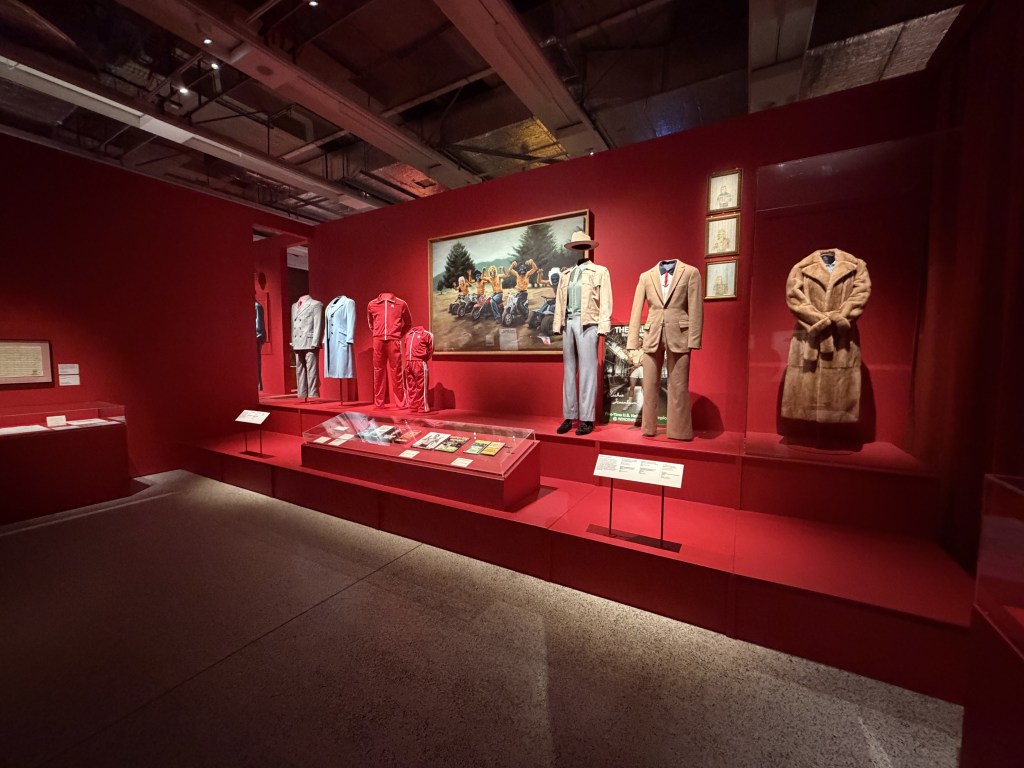
It isn’t until you get to said film that you start to see attention to detail and props, which now dominate his movies. The fake magazine covers, composer sheets and Gwyneth Paltrow’s Margot Tenenbaum’s FENDI coat show how he meticulously builds his world and personality.
It’s for that reason you don’t need to read the plaques to figure out which film you’ve walked into; the costumes and props will tell you immediately. You can also pinpoint the exact moment he started to fully embrace his own style at Moonrise Kingdom.
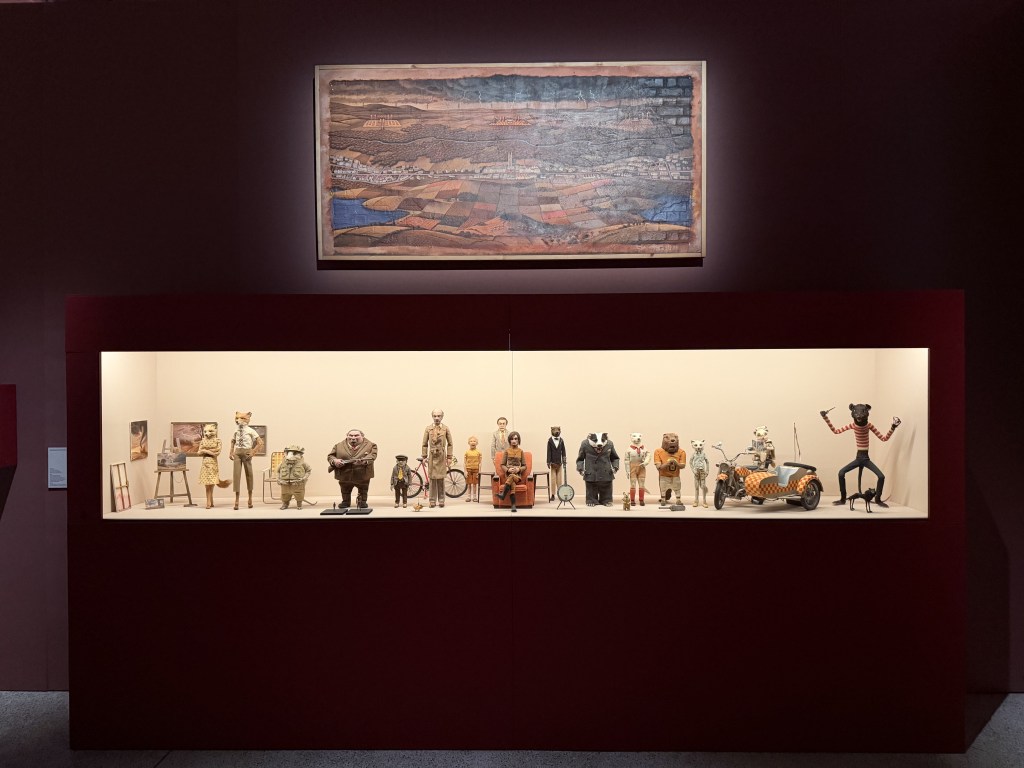
What makes Anderson worthy of this exhibition more than others is his delving into stop motion. It was Fantastic Mr Fox which cemented Anderson as one of our most creative minds, and Isle of Dogs proved it was no fluke. This is by far the most impressive of the exhibition. Seeing each bit of fur which would have been stuck down really gives you a sense of the time each scene in the films would have needed.
In the words of Mr Fox, it is cussing brilliant. It’s a hard place to move away from. You find yourself taking extra care while looking to make sure you have really taken in everything it has to offer.
Perhaps the only thing that would equal the excitement of Fantastic Mr Fox would be The Grand Budapest Hotel. It was around this point I found myself audibly gasping and saying wow in the same way long-time collaborator Owen Wilson does.
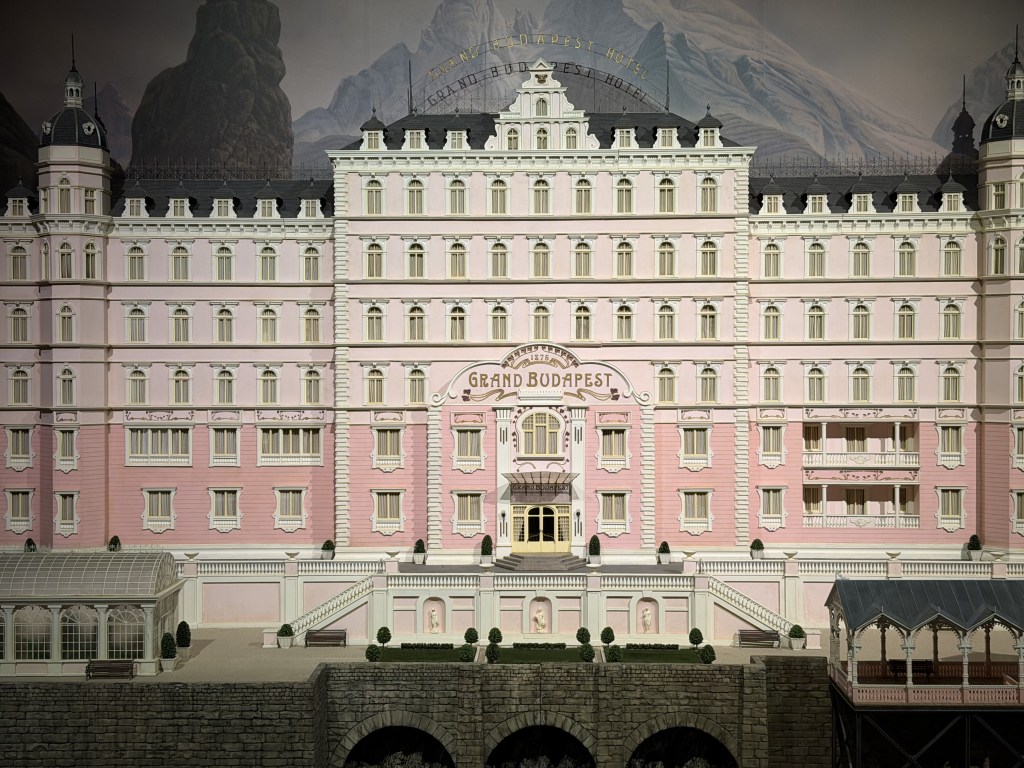
This is a master at work. It is beyond impressive seeing the hotel and the paintings from Benicio del Toro’s Moses Rosenthaler. They bring these films to life in front of you. The fake magazine covers from The French Dispatch are cool, but you are here for the big set pieces like the train from The Darjeeling Limited and the rocket and crater from Asteroid City, and this exhibition more than delivers on your expectations.
Not to say this is a pompous, ego-inflating showcase for Anderson; if anything, this shows how well his collaborators do at turning his faint ideas into these grandiose sets. It gives the people who would have spent hours bringing his films to life their chance in the spotlight, which you get to admire.
The best directors adapt with the times and their own ideas, and although Anderson may have pigeonholed himself into a symmetrical box, this exhibition shows he is a master at giving the box a fresh and unique look.
The showcase disappears on July 26 and would be a great way to breathe some life into your hope for the future of film.
If nothing else, it is a great showcase of persevering with your own ideas. Or, as Anderson puts it, your own handwriting.
- Wes Anderson: The Archives is no longer on display