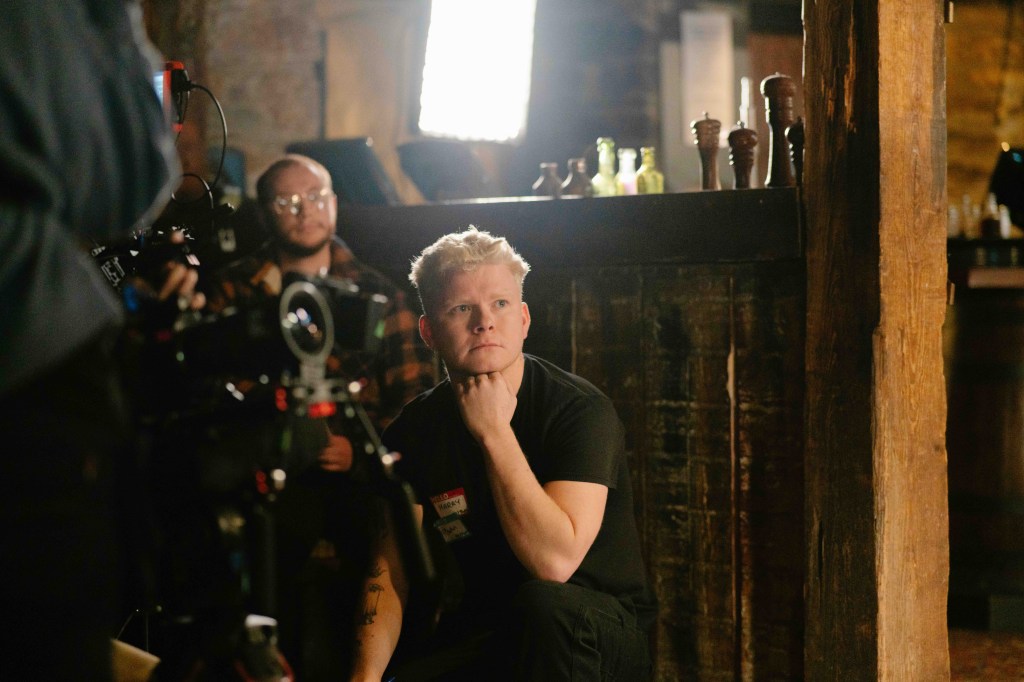
Opportunities for LGBTQ+ creatives in the film industry are slim — filmmakers like Harry Faint are helping break down those barriers.
In Spring 1988, Margaret Thatcher’s government passed a controversial law called Section 28 — an act which prohibited local authorities from promoting homosexuality by ‘teaching or publishing material’ and from teaching ‘the acceptability of homosexuality as a pretend relationship’.
It was a highly contested act on arrival. LGBTQ+ people from across the country united in thousands to protest against the law. They were going to make sure they remained seen. After a hard-fought 25 years, on 18 November 2003, the act was revoked. The dark cloud that had been cast above the LGBTQ+ community had finally started to have rays of sunshine push through.
Though the law was removed, the ramifications are still felt for LGBTQ+ people across England in all walks of life and industries. The implications on the film industry were no different.
As of 2026, it is still harder for an LGBTQ+ person to break into the industry than it is for someone who is heterosexual. LGBTQ+ filmmakers across England are working hard to make sure the opportunities are equal for everyone. This is filmmaker Harry Faint’s goal.
“I really want people to be able to tell their own stories. I think that kind of cuts across all humanity, not necessarily just queer individuals. Im interested in supporting storytellers telling their own story. We’re trying to tell these stories from spaces which aren’t metropolises,” says Harry.
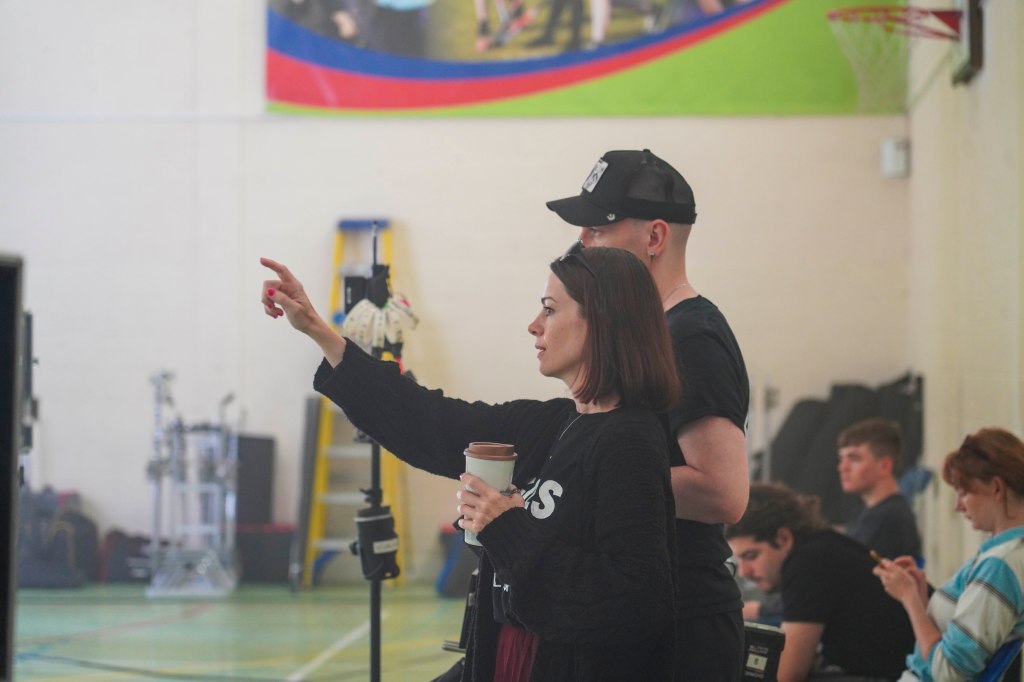
Harry, 31, is a film director and teacher at Falmouth University. Based in the South-West of England, he is working hard to make sure LGBTQ+ people in his community have the opportunity to work on all aspects of a film set.
He had felt the toxic legacy of Section 28 while growing up. Most predominantly, he felt it on his Prom night.
A few weeks before the event, Harry and his then-boyfriend had won the vote for Prom King and King. However, it wasn’t a royal chariot that awaited them; it was a dethroning. Although the rightful heirs to the throne, the teachers stopped the vote from going ahead because they believed the young couple was being bullied.
Harry knew this wasn’t the case. His classmates loved him and his then-boyfriend. “When it happened to me, I was so angry because I was like ‘this is ridiculous’, this is supposed to be something joyful,” says Harry, who, for a long time, felt confused about why such a thing happened.
He spent many years angry and annoyed about that night. That was until he became a teacher himself, then he started to understand. “When I became a teacher, I was like ‘oh, I get it’ I get the angle, and I get the circumstance… I’m glad that I took the time to understand the other side,” says Harry.
He understood the impact from Section 28 was still present for his teachers at the time. This is where Harry’s goal as a teacher and a filmmaker is. He wants to make sure conversations about gender and sexuality are happening in safe spaces so people can start to understand people’s experiences.
“We’re all human, we just have different experiences with who we love or the gender we identify as. I’m just interested in telling the right stories,” he says.
Harry knows how it feels to think you don’t have a voice. He himself spent many years thinking he couldn’t make films. Until one day, his friend and writer Natayls Willcox sent him a script. It was a dramatised story based on his prom night called King Henry.
“It was very cathartic to put that time to bed because I feel like I spent most of my early 20s being angry about what it felt like. It was a really nice kind of recognition,” says Harry.
It was a long process to get the 12-minute short finished. It cost £16,000 to make and took a lengthy ten months to finish after receiving its first bit of funding. It was a long journey, but one Harry is thankful for.
“I had always wanted to make films while studying at Falmouth University, but it wasn’t until I became a teacher that I realised I had a voice and was in a position to make something,” Harry says. He has found his voice as a filmmaker. Now, he is making sure others have a chance.
“What I try to pass on to the students that I teach is that you have a voice that is different to the person next to you. I’m interested in what that voice is. If you’re able to help tell someone’s story, that’s the coolest thing,” Harry says passionately. He wants to be the role model he wished he had growing up.
Harry is the South West Regional Ambassador for It Gets Better UK, a charity which helps LGBTQ+ members feel empowered. Alongside this, he has co-founded a film company called FLYM ANKOTH, a film company based in the South-West, intending to help LGBTQ+ people tell their stories.

Since its inception, Harry has created two other short films called Jockstrap and Lymp, both of which focus on experiences Harry has had as a gay man. Early this year, Harry produced a new short film called The Boy, a western about a transgender woman searching for a lost boy, created by Isla Ley, which is currently in post-production.
Authentic stories based from LGBTQ+ people’s experiences deserve to be told freely, and Harry’s company has started taking strides in ensuring that these creatives are being heard both in front and behind the camera.
“I’m so interested in the storytellers as much as the story being told,” says Harry, “I think that representation is almost more important.”
“As a director and a writer, I would rather work with a gay individual on a gay story because it’s that shared experience that we can pull from together. The systems are against these people working. The system is against these people acting in general. So for me, I want to support the visibility of that.”
The film industry has a long way to go to create safe spaces for LGBTQ+ individuals. Harry knows this. This isn’t an overnight fix. It’s especially not one Harry can do on his own. One way Harry can try to help is by breaking down the barriers people may build within themselves.
“There definitely are external forces that are discriminatory. But then I also feel like a lot of the issues that I’ve faced have actually been walls that I built up in my own head,” he says, speaking from personal experience.
“That’s what I’m really interested in at the moment, writing characters that it’s not necessarily external homophobia, it’s internal homophobia or transphobia. It’s those kinds of walls that we’re building up.”
That is where Harry’s focus lies. Filmmaking is a powerful tool, and he wants to use it to help people process issues or feelings they face. That’s where his passion lies.
“I make films for me to unpick stuff that I’ve gone through or how I’m feeling. What I hope is that audiences can be like ‘oh, I feel like that’, or I’m going to go away and think about actually how I feel about that,” he says.
“I hope that my work resonates with people to help them pick things in their lives to live better.”
The legacy of Section 28 may always be felt, but with the continuation of the work that Harry is doing, the hope is that LGBTQ+ people have the same opportunities as everyone else.
- Harry’s short film King Henry is free to watch on Youtube